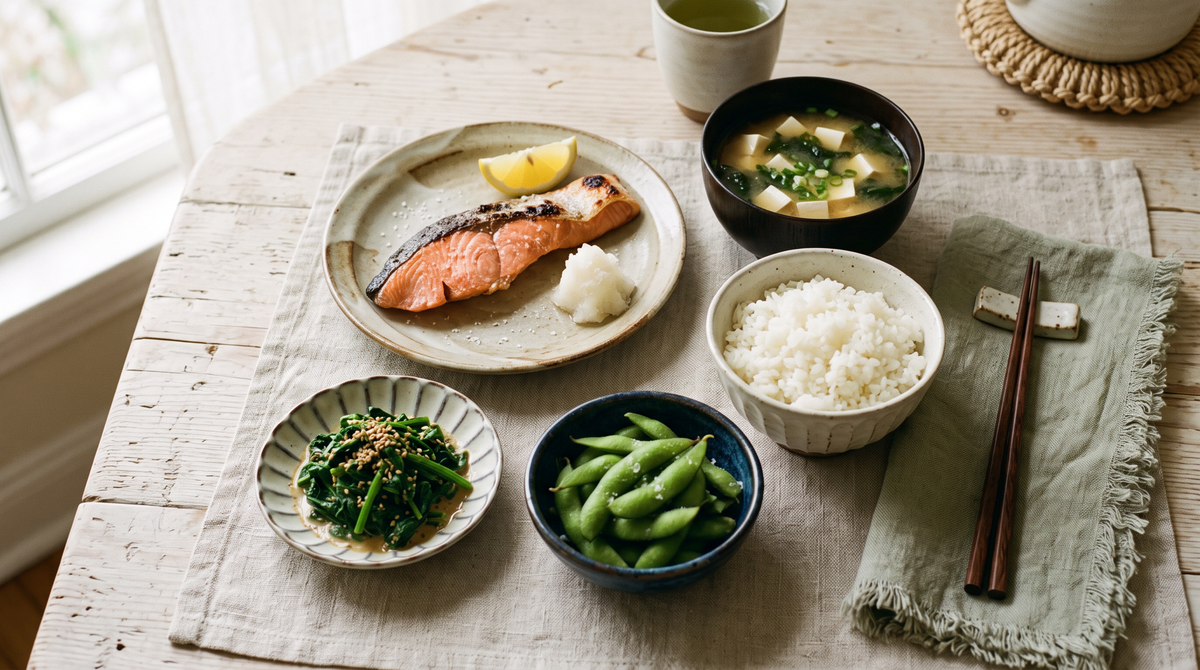
Washoku, Japan's traditional food culture, was added to UNESCO's Representative List of the Intangible Cultural Heritage in 2013. Japan also has one of the highest life expectancies in the world. How much of that comes from food is hard to say, because many things play a part. But a few habits from the Japanese kitchen fit well with the Dutch dietary guidelines, and they are easy to bring into a Dutch week.
Four habits worth borrowing
1. Fish, and often oily fish
Fish is a normal part of everyday meals in Japan, including breakfast. The Dutch Health Council advises eating fish once a week, preferably oily fish such as salmon, mackerel, herring or sardines. Oily fish provides the omega-3 fatty acids EPA and DHA, and it is one of the few foods with a fair amount of vitamin D. More in Omega-3: EPA and DHA explained.
2. Soy foods as a source of protein
Tofu, edamame and miso are everyday ingredients in Japan. Tofu and edamame are good sources of plant protein, and protein matters more as you get older because it helps maintain muscle. More in Protein after 50.
Whether soy reduces hot flushes is not clear. Some studies in Japan found that women who ate about two servings of soy foods a day had fewer and milder hot flushes, but that kind of study cannot show cause and effect. Trials with soy extracts in pills have not shown a clear effect, and the Dutch GP guideline does not recommend them. So eat soy foods because they are good food, not as a treatment.
3. One soup, three dishes
A classic Japanese meal is built as ichijū sansai: rice, one soup, a main dish (often fish or tofu) and two vegetable side dishes, with pickles on the side. The result is a lot of variety on one table, with vegetables in more than one form. The Dutch advice is 250 grams of vegetables a day, and several small vegetable dishes make that easier than one large portion.
4. Stop before you are full
In Okinawa, older people use the saying hara hachi bu: eat until you are 80 percent full. Smaller bowls and eating slowly help with that.
One thing to watch: salt
Miso, soy sauce and pickles contain a lot of salt, and salt intake in Japan is high. The Dutch advice is no more than 6 grams of salt a day. Use reduced-salt soy sauce, use miso in small amounts and do not add extra salt to dishes that already contain it.
Three simple recipes
Salmon with miso, spinach and rice
- 150 g rice
- 2 salmon fillets
- 1 tablespoon white miso
- 1 teaspoon honey
- 1 teaspoon rice vinegar
- 300 g fresh spinach
- 1 tablespoon sesame seeds
- Cook the rice. Heat the oven grill.
- Mix the miso, honey and rice vinegar and spread it over the top of the salmon.
- Grill the salmon for 8 to 10 minutes, until it flakes easily. Keep an eye on it, the miso browns quickly.
- Wilt the spinach in a pan with a splash of water, squeeze out the moisture and sprinkle with sesame seeds.
Miso soup with tofu
- 600 ml water
- 1 teaspoon dashi powder, or low-salt vegetable stock
- 2 tablespoons miso
- 150 g firm tofu, in small cubes
- a handful of spinach or a little dried wakame
- 1 spring onion, in rings
- Bring the water and dashi to the boil, add the tofu and greens and simmer for 2 minutes.
- Take the pan off the heat. Stir the miso with a little of the hot liquid in a cup, then stir it into the soup. Do not let it boil again after adding the miso.
- Serve with spring onion.
Edamame and cucumber salad
- 200 g shelled edamame beans (frozen)
- 1 cucumber
- 1 tablespoon rice vinegar
- 1 teaspoon sesame oil
- 1 teaspoon reduced-salt soy sauce
- 1 tablespoon sesame seeds
- Cook the edamame for 3 minutes, rinse with cold water and drain.
- Halve the cucumber lengthwise, scrape out the seeds and slice it thinly.
- Mix the vinegar, sesame oil and soy sauce, toss everything together and sprinkle with sesame seeds.
Sources
- UNESCO, Washoku, traditional dietary cultures of the Japanese (inscribed 2013).
- Gezondheidsraad, Richtlijnen goede voeding (2015).
- Voedingscentrum, advice on vegetables and salt.
- NHG-Standaard De overgang (2022).
- University of Delaware, Menopause myths debunked: Melissa Melby (2025).