In Japan, the years around menopause are called kōnenki (更年期). The word says something about how this stage can be seen, and research comparing Japan with North America has changed how scientists think about menopause symptoms.
What the word means
Kōnenki is made of three characters: 更 (renewal or change), 年 (years) and 期 (a period of time). Researchers usually translate it loosely as a season of renewal. The last character also appears in shishunki (思春期), the Japanese word for puberty. Both describe a stretch of years in which the body changes, not a single event.
The last period itself has a separate word, heikei (閉経). So where English and Dutch often use "menopause" for the whole stage, Japanese separates the moment from the years around it.
What researchers found
In the 1980s and 1990s the Canadian anthropologist Margaret Lock surveyed more than 1,200 Japanese women aged 45 to 55 and compared them with more than 8,000 women in Massachusetts and 1,300 in Manitoba, Canada. Japanese women reported hot flushes and night sweats significantly less often. Women who did mention a complaint more often named stiff shoulders or headaches. Lock published her findings in her book Encounters with Aging and in the journal Psychosomatic Medicine in 1998.
The anthropologist Melissa Melby has studied the same question for almost thirty years. Lock noted that Japanese has three terms for different kinds of heat sensations, and Melby studied how they differ in timing and feel. As Melby puts it: "In the West, our single word for hot flash might underestimate the amount of variation in the phenomenon." She also argued that feeling cold can be a menopause symptom, an idea a journal first rejected.
Why the difference?
Nobody has a single answer. The explanations researchers discuss include:
- Language. If you have no common word for a sensation, you may notice it differently, and you are less likely to report it in a survey.
- Expectations. When a stage is seen as a normal adjustment, like puberty, women may experience and describe it differently than when it is seen as a medical condition.
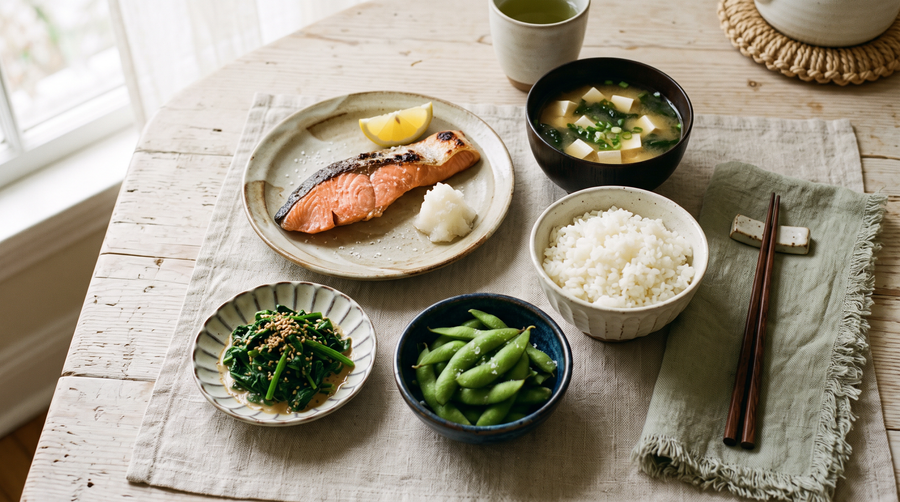
- Diet. Traditional Japanese diets include more soy and fish. Melby and colleagues found that about two servings of soy foods a day were linked to fewer and milder hot flushes. That is an association, not proof, and trials with soy supplements have not shown a clear effect. The Dutch GP guideline does not recommend them.
- Medicine. Japanese women use less hormone therapy, and doctors and patients talk about symptoms in different ways.
Melby does not think genetics explains much of it. The picture is also changing: diets and lifestyles in Japan have become more Western, and younger generations may experience this stage differently from the women Lock interviewed.
What we take from it
The research does not show that one country does menopause better. It does show that the experience is shaped by more than hormones alone: by words, expectations, food and how we talk to doctors.
Two practical things follow. First, describe what you feel in your own words, including symptoms that are not on the usual lists. Tracking them in a symptom diary helps. Second, seeing this stage as a period of change does not mean putting up with symptoms that bother you. Our guide explains what helps and when to see your GP.
Sources
- Lock M. Menopause: lessons from anthropology. Psychosomatic Medicine, 1998;60(4):410–419.
- Lock M. Encounters with Aging: Mythologies of Menopause in Japan and North America. University of California Press, 1993.
- ScienceDaily, Menopause affects Japanese women less than Westerners (1998).
- University of Delaware, Menopause myths debunked: Melissa Melby (2025).
- NHG-Standaard De overgang (2022).